






Tattoo and P-Makeup Lightening
Course with Removers in Liepāja:
Theory and Practice
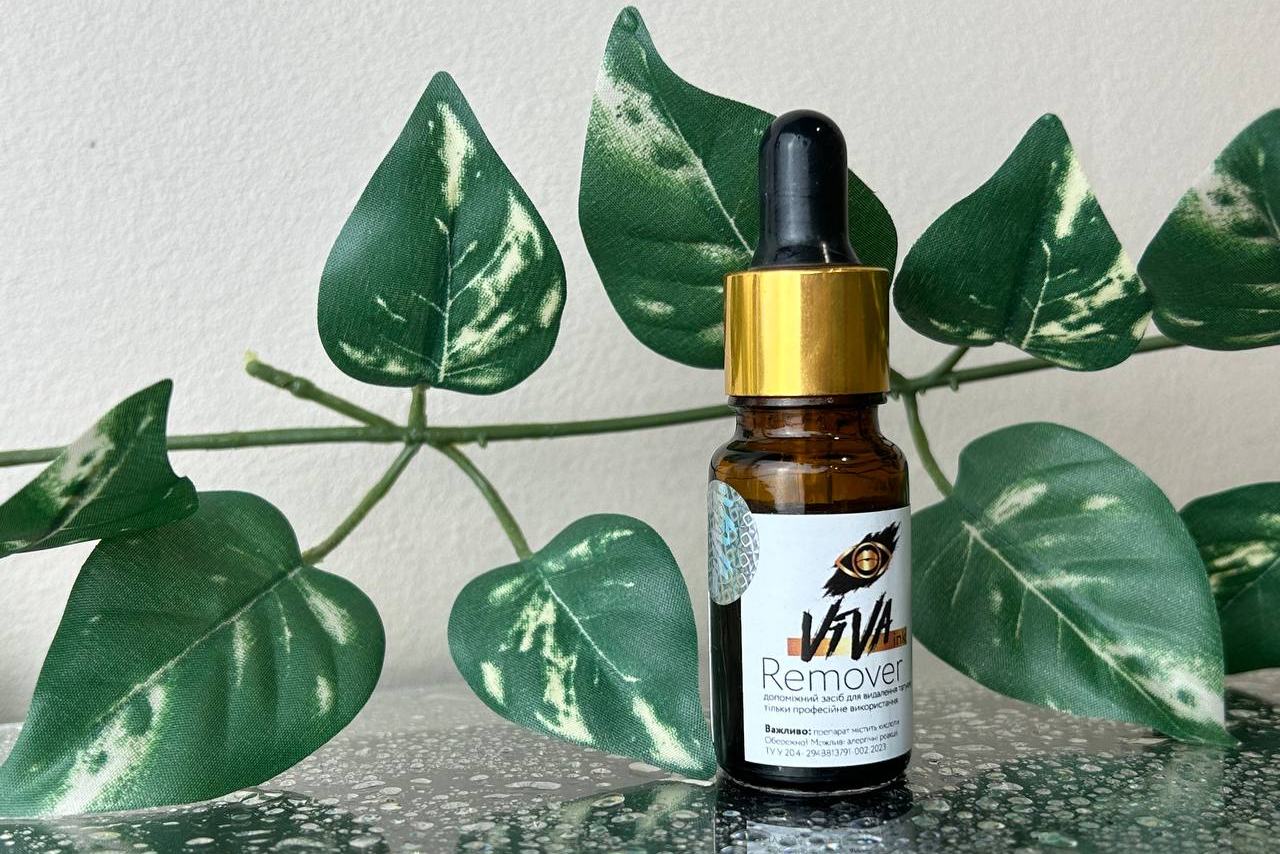
Remover-based lightening of tattoos and permanent makeup in Liepāja is a contemporary technique focused on gradually reducing pigment visibility within the dermal layer.
The procedure relies on controlled chemical extraction: a specialized solution is carefully introduced into the area where pigment particles are located, initiating a localized regenerative response.
During the healing phase, fragments of pigment are naturally displaced toward the skin surface and removed together with the forming scab. This process allows practitioners to soften color intensity, refine existing shapes, and prepare the skin for corrective work, cover-ups, or further aesthetic procedures.

 Create a design in the VEAN TATTOO AI generator

Theoretical Module
The theoretical component of the course is designed to build a solid understanding of how remover solutions interact with pigment and skin structures.
Participants explore skin anatomy, biological healing mechanisms, and the behavior of various pigment types under chemical influence.
Such knowledge enables specialists to approach treatments with greater precision, anticipate skin responses, and design safer procedural strategies.
- Structural layers of the skin and pigment localization
- The role of macrophages in pigment retention and elimination
- Types of remover formulations: acidic, alkaline, and saline-based
- Osmotic displacement of pigment particles
- Controlled inflammatory response and tissue repair stages
- Interaction with organic, mineral, and mixed pigments
- Indications, limitations, and contraindications
- Potential risks and prevention techniques
Additional emphasis is placed on aseptic standards, hygiene protocols, and factors that influence treatment predictability.


Practical Module
The hands-on training phase focuses on translating theory into confident practical skills.
Under the supervision of experienced instructors, participants practice techniques in conditions that closely reflect real clinical work.
The course teaches how to structure a safe treatment workflow and adjust technique depending on pigment characteristics and skin condition.
- Conducting a thorough client consultation and assessment
- Determining pigment depth and concentration
- Choosing an appropriate remover application method
- Monitoring penetration depth and tissue response
- Achieving uniform treatment coverage
- Implementing effective aftercare protocols
Special attention is given to minimizing the risk of scar formation and ensuring proper client guidance throughout the recovery process.
Practice on Live Models
Working with models is a key stage in developing professional competence. It allows participants to observe real-time skin reactions, refine manual technique, and make informed decisions during procedures.
With mentor support, trainees perform treatments independently and receive detailed performance feedback.
- Establishing correct hand positioning and controlled movements
- Managing the depth of solution delivery
- Evaluating skin response dynamics over time
- Planning safe intervals between sessions
This experience deepens understanding of different skin phototypes and pigment densities while strengthening practitioner confidence.


Learning Outcomes
After completing the remover lightening course in Liepāja, specialists gain both theoretical insight and practical expertise in safe pigment correction techniques.
This expands their service capabilities and enhances the overall quality of treatments they provide.
A structured educational approach supports more stable and predictable outcomes in daily practice.
- Clear understanding of chemical pigment extraction mechanisms
- Confident technique selection and depth control
- Ability to work with tattoos and permanent makeup of varying saturation
- Reduced likelihood of complications and adverse effects
- Professional client management throughout all healing stages
Who Should Attend
This course is intended for cosmetologists, tattoo artists, permanent makeup specialists, and other aesthetic professionals seeking to master modern pigment lightening methods.
It is particularly valuable for those looking to upgrade their qualifications, broaden their treatment portfolio, and perform procedures with greater safety, efficiency, and reliability.